Summer Term Reception Maths Resources – Early Years Maths Foundations Scheme

Welcome to our maths scheme, Maths Foundations Early Years, designed specifically for early years reception children.
Here you will find everything you need to teach our story-led maths scheme in the Summer term, created to support White Rose Maths and the Early Years Foundations Stage Framework.

Week 12 and Week 13 - Consolidation and Assessment
Use our 10 consolidation teaching packs in the last 2 weeks of the summer term to help recap learning from all the summer blocks and carry out activities and observations to help assess where each child is as before moving onto year 1.
These two weeks of teaching are completely optional, offering concept cartoons for discussion, activities, observation and progression documents and more to help bring your summer term maths to a close and prepare the children for year 1.
Block 1 - Make Connections
Week 1
Our Week 1 content for Make Connections was created to support children as they look to deepen their understanding of numbers to 10, the relationships between them and the patterns within those numbers, by revisiting characters from our past Autumn and Spring story books.
This block also provides opportunities to build and develop their spatial reasoning skills across all areas of mathematics, including shape, space and measures.
Deepening Understanding
Patterns and Relationships

118
Let's Dance Activity

This lively, movement-based activity helps children consolidate their understanding of number relationships within 10 through music and play.
109
Make Connections Teaching Essentials

This Maths Foundations Early Years Teaching Essentials pack gives you everything you need to prepare to teach Block 1 Week 1 Make Connections in the Summer term of Reception.
139
Checkpoint Prior Learning Slides

This interactive PowerPoint then asks the children to recap Step 12: Doubles to 10 (make a double) by helping Flo with her doubling pot, to predict how many of each object there will be.
104
Deepening Understanding Prior Learning Slides

The children will start by recapping Spring Block 1: Alive in 5, by helping Brie the Builder from our Spring Block 1 story ‘The Golden Cheese’, to find 0-5. The children will also be challenged with some bigger numbers to 20.
122
Flo's Bug Grub Problem Solving Tuff Tray

Children solve challenges such as making a total number of eyes, wings or legs, exploring different combinations to reach a given total.
90
Patterns and Relationships Prior Learning Slides

The children will start by recapping Spring Block 4: Length, Height and Time, by helping Blue and the chickens to find the longest and shortest worms.
92
Bridge Building Activity

Using a range of materials, children design and build bridges, comparing which are longer, shorter, strongest or the same length.
Block 2 - To 20 and Beyond
Week 2
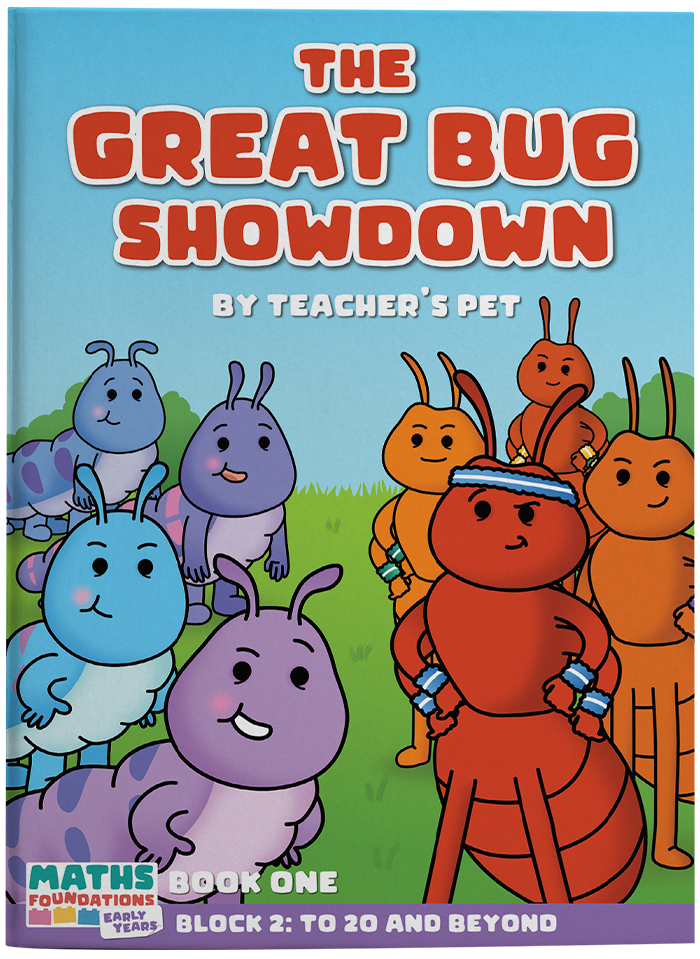
In Week 2 the children will focus on Block 2 by looking at numbers to 20 and beyond through our original story book ‘The Great Bug Showdown’.
Join the ants and the caterpillars as they go head-to-head in 3-sports day events, providing lots of opportunity for building and continuing numbers 10-20 and beyond.
Build numbers 10-13
Continue patterns 10-13
Build numbers 14-20
Continue patterns 14-20
169
The Stacking Number Challenge

This practical investigation supports children in developing a deeper understanding of number order and teen numbers through a visual stacking challenge.
135
The Great Bug Showdown Teaching Essentials

This Maths Foundations Early Years Teaching Essentials pack gives you everything you need to prepare to teach Block 2 Weeks 2 and 3 To 20 and Beyond in the Summer term of Reception.
110
The Great Bug Showdown Prior Learning Slides

This interactive PowerPoint then asks the children to recap Spring Block 5: Building 9 and 10 by trying to find the 3 groups that make ten, looking at step 10: Bonds to 10 (3 parts).
220
Bug Race Tuff Tray

Children take part in a bug-themed race, recognising teen numbers, building them using practical resources such as ten frames, Numicon and counters, and completing challenge cards as they move along the board.
Week 3
Our Week 3 content continues to look at our original maths story book, The Great Bug Showdown, tapping into the steps that were not covered in week 2.
New activities and tuff trays will provide children with opportunities to count beyond 20 and explore verbal counting patterns.
Verbal counting beyond 20
Verbal counting patterns
128
Bug Snatch Activity

This engaging, game-based activity supports children in developing a secure understanding of numbers to 20 and beyond through counting, subitising and early subtraction.
124
Line Up Bugs! Challenge

The activity encourages children to recognise patterns within the number system, particularly how numbers change across rows and columns, and to use this understanding to identify missing values.
186
Sports Day Line Up Tuff Tray

Children arrange groups of ants and caterpillars to create their own number line, placing quantities in the correct order and identifying which numbers come before and after.
Block 3 - How Many Now?
Week 4
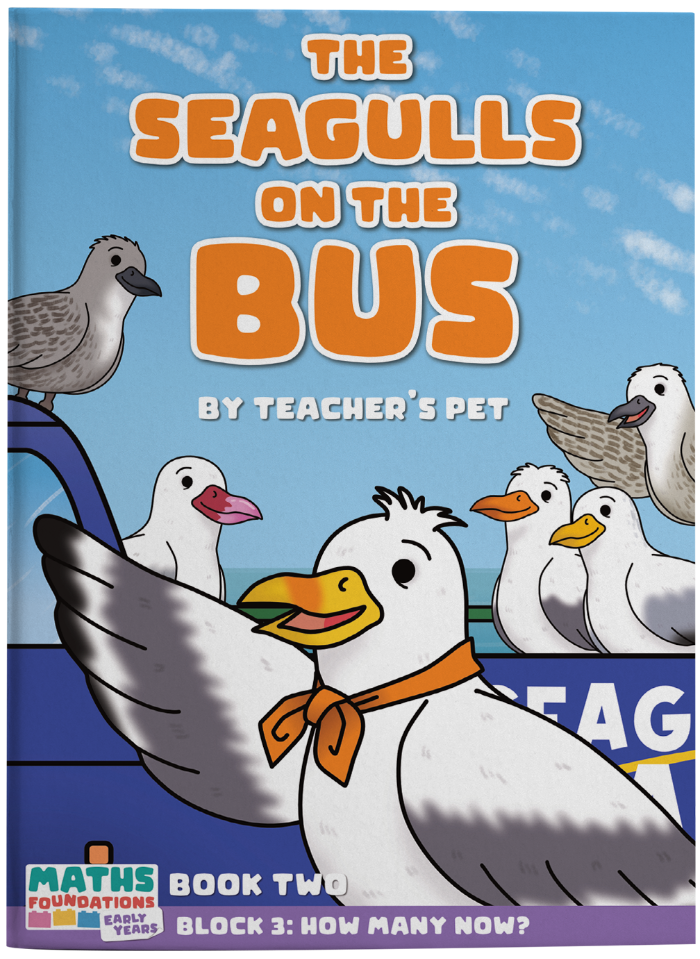
In week 4 the children will focus on Block 3 by looking at how many now? Using our original story book 'The Seagulls on the Bus’.
Join the seagulls as they head to Pebble Bay on their Seaside Snack Tour Bus, ready to cause chaos on and off the bus. Can Captain Squawk keep track of their comings and goings and work out how many now? In this fun ‘first, then, now’ number story.
Add more
How many did I add?
Take away
How many did I take away?
101
What's the Maths Story? Activity

One child secretly adds or removes seagulls while their partner observes the change, encouraging them to think carefully about what has happened between first, then and now.
113
The Seagulls on the Bus Teaching Essentials

This Maths Foundations Early Years Teaching Essentials pack gives you everything you need to prepare to teach Block 3 Week 4 How Many Now? in the summer term of Reception.
107
The Seagulls on the Bus Prior Learning Slides

This interactive PowerPoint then asks the children to find numbers 14-20 as they continue to recap Summer Block 2: To 20 and beyond by helping Captain Squawk to match the numeral to the correct representation.
152
Seagulls on a Bus Tuff Tray Pack

Children use a structured first, then, now approach to represent what is happening, building a clear understanding of how numbers increase when more are added and decrease when some are taken away.
Block 4 - Manipulate, Compose, Decompose

Week 5
In week 5 the children will begin to focus on Block 4 by looking at manipulating, composing and decomposing shapes.
Our shape building tuff tray asks the children to help Inspector Nelly as he looks to solve lots of shape related mysteries, providing opportunities for selecting shapes for a purpose and manipulating shapes and our Inspector Nelly training game is a great opportunity to practise rotating shapes, manipulating shapes and explaining shape arrangements.
Select shapes for a purpose
Rotate Shapes
Manipulate Shapes
Shape arrangements
101
Inspector Nelly Shape Training

One child creates a model using 2D shapes while describing their actions, and their partner listens carefully to recreate the same arrangement without seeing it.
96
The Case of the Curious Shapes Teaching Essentials

This Maths Foundations Early Years Teaching Essentials pack gives you everything you need to prepare to teach Block 4 Weeks 5 and 6 Manipulate, Compose and Decompose in the Summer term of Reception.
101
The Case of the Curious Shapes Prior Learning Slides

The children will start by recapping identifying and naming circles, triangles, rectangles and squares, naming them and their features from Autumn Block 4 and 6, by helping Inspector Nelly to name the shapes.
127
Shape Builder Tuff Tray

Using a star template, children experiment with fitting different shapes together, manipulating them to complete the design. Children are encouraged to explain their choices and describe how they have positioned each shape, using vocabulary such as rotate, flip, next to and position.
Week 6
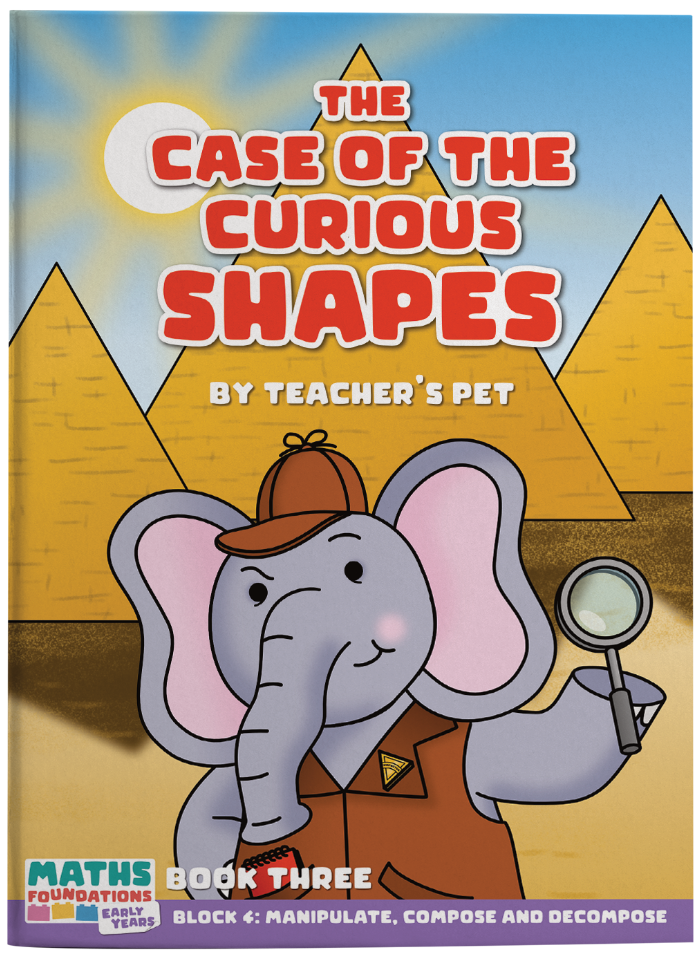
In week 6 the children will continue to look at Block 4 - Manipulate, Compose and Decompose through our original maths story book The Case of the Curious Shapes.
Join Inspector Nelly as he travels the world solving shape mysteries where structures have fallen apart or been rearranged incorrectly. In each location, Nelly explores how shapes can be taken apart (decomposed) and put back together (composed), using rotation and rearrangements to fix pyramids, mountains, buildings and castles. Through practical problem-solving, children see how shapes combine to make new forms and how longer shapes can be broken into smaller parts.
Compose shapes
Decompose shapes
Copy 2D shape pictures
Find 2D shapes within 3D shapes
85
Inspector Nelly Shape Hunt

Taking on the role of Inspector Nelly, children investigate objects and shape cards to spot familiar 2D shapes such as circles, squares, rectangles and triangles on the faces of 3D shapes.
76
The Case of the Curious Shapes Book Notes

Our Book Notes for The Case of the Curious Shapes gives key questions, sentence stems and guidance for pages within our original summer maths storybook Three the Case of the Curious Shapes.
119
2D Shape Pictures Tuff Tray

Using pre-cut shapes, children recreate images by carefully arranging, rotating and combining shapes to match the original design.
Block 5 - Sharing and Grouping

Week 7
In week 7 the children will begin to focus on Block 5 by looking at the sharing portion of Block 5: Sharing and Grouping.
The children will explore sharing through a safari animals picnic themed tuff tray, as well as look at odd and even sharing by sharing paint colours as they decorate the elephants ready for the Pride of the Plains Festival. Our Festival Throw outdoor activity also offers the children the opportunity to further practise sharing, for the purposes of playing a fair game.
Explore sharing
Sharing
Even and odd sharing
86
Even and Odd Sharing Activity

Children select a numeral card, count out the matching number of paint splats and then share them equally between two elephants to determine whether the quantity can be split into two equal groups.
76
Festival Throw Outdoor Activity

Children must work together to share a set number of quoits or beanbags equally between players, ensuring that everyone has the same amount. Once the equipment has been shared fairly, children take part in a throwing game and record their scores, providing opportunities for counting and comparison.
73
Sharing and Grouping Teaching Essentials

This Maths Foundations Early Years Teaching Essentials pack gives you everything you need to prepare to teach Block 5 Week 7s and 8 Sharing and Grouping in the Summer term of Reception.
77
Festival Fun Prior Learning Slides

Can the children: identify what shapes are missing? Work out which number shape matches the outline? And use Apollo’s clues to guess the 3D shapes?
103
Pride of the Plains Picnic Tuff Tray

Children are challenged to share a selection of picnic foods fairly between the festival guests, ensuring that each person receives the same amount.
Week 8
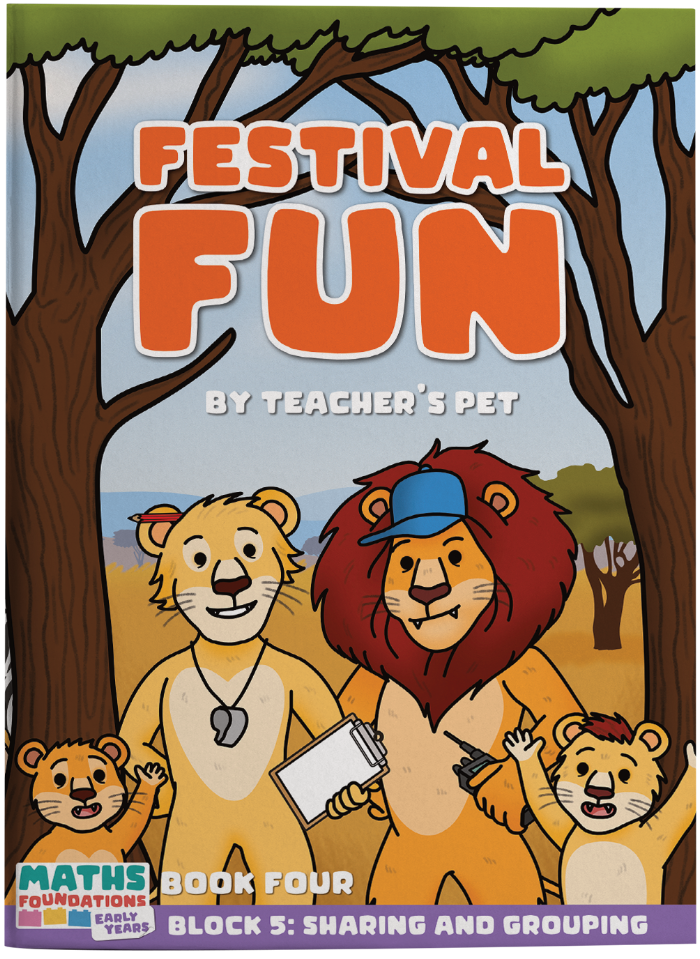
In week 8 the children will continue to look at Block 5 - Sharing and Grouping through our original maths story book Festival Fun.
Join Apollo, Cleo and the cubs as they prepare for the annual Pride of the Plains Festival. Throughout the day, they organise the animals by creating equal groups, from pairing zebras with flags and sharing paint colours between elephant, to making matching head dresses for giraffes and arranging meerkats on the festival float. Each task encourages the children to think about grouping, equal groups and how qualities can be organised fairly.
Explore grouping
Grouping
Play with and build doubles
76
Festival Float Activity

Children place meerkats onto a festival float, arranging them into groups of two and investigating which quantities can be organised into equal groups and which cannot.
76
Doubling Lions Activity

Children roll a dice, double the number shown and then find and cover the matching doubled number on their lion number mat.
69
Festival Fun Prior Learning Slides

The children will start by recapping decomposing shapes from Summer Block 4 Manipulate, Compose and Decompose, by using the triangle shaped napkins to make new shapes.
60
Festival Fun Book Notes

Our Book Notes document for Festival Fun provides key questions, sentence stems and guidance for pages within our original summer maths storybook Four Festival Fun.
90
Festival Giraffes Tuff Tray

Children select a number card to determine how many giraffes are taking part in the parade, then dress each giraffe with a headband, feather and flower, working out how many items they will need altogether.
106
Savannah Doubles Tuff Tray

Children explore the landscape, identifying animals, trees, rocks and other objects that represent doubles, and explaining how they know.
Block 6 - Visualise, Build and Map
Week 9
In Week 9 the children will begin to focus on Block 6 by looking at the patterns portion of Block 6: Visualise and Map, as well as the beginning of exploring mapping through replicating and building scenes and construtions.
The children will look at identifying units of repeating patterns, as well as creating their own pattern rules through the help of a Pirate Patterns treasure themed tuff tray and our Pirate Sealeg's Sandcastles activity gives children the opportunity to develop their visualisation, spacial reasoning and model-building skills. This is the beginning of mapping.
Units of repeating patterns
Create pattern rules
Explore pattern rules
Replicate and build
90
Pirate Sealeg's Sandcastles Activity

Using a range of open-ended materials, children carefully study the reference pictures and build matching structures, paying close attention to the shape, size and position of each feature.
73
The Not-So-Secret Treasure Teaching Essentials

This Maths Foundations Early Years Teaching Essentials pack gives you everything you need to prepare to teach Block 6 Weeks 9, 10 and 11 Visualise, Build and Map in the Summer term of Reception.
74
The Not-So-Secret Treasure Prior Learning Slides

The children will start by recapping sharing and what happens when something cannot be shared equally, from Summer Block 5 Sharing and Grouping, by helping the pirates to share the treasure.
120
Pirate Patterns Tuff Tray

Using treasure-themed resources such as gems, coins and pirate treasures, children copy, continue and create patterns, identifying the unit of repeat and explaining the rule that makes the pattern work.
Week 10
In Week 10, the children will continue with Block 6 by focusing on giving instructions and describing positions using positional language. These skills build on previous learning from the autumn and spring terms.
The children will be encouraged to look at a jungle-themed small world from different perspectives, developing their spatial awareness in our Jungle Hide and Seek tuff tray.
Our Captain's Orders activity gives children the opportunity to develop their spatial awareness skills further and giving instructions to build. These skills further support the children as they delve deeper into mapping.
Visualise from different positions
Describe positions
Give instructions to build
64
Captain's Orders Activity

Taking on the roles of captain and crew, children use a selection of pirate-themed objects to create a treasure map before giving clear verbal instructions for a partner to recreate it.
65
The Not-so-Secret Treasure Prior Learning Slides

The children will start by recapping steps 1 and 2 from Visualise, Build and Map by looking at treasure found at Bubbles Creek and identifying units of repeating patterns and creating pattern rules.
84
Jungle Hide and Seek Tuff Tray

Children hide pirate characters around a jungle island scene and use positional language to describe where they are hidden, using vocabulary such as behind, in front of, next to, above, below and between.
Week 11
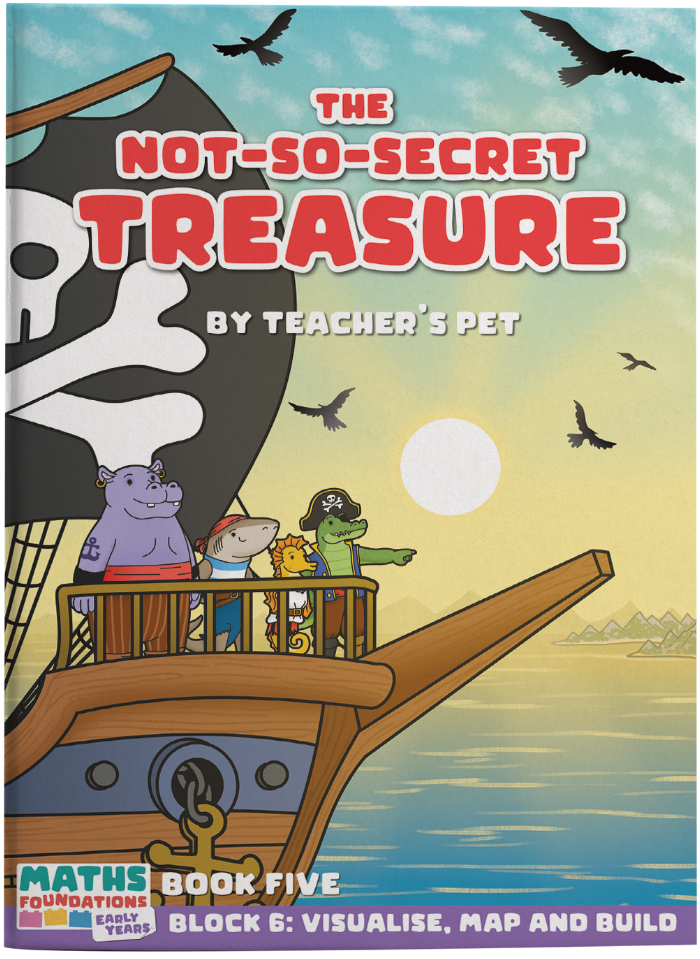
In Week 11, the children will complete Block 6 by reading our original maths story The Not-So-Secret Treasure designed to support children as they look at exploring mapping and representing maps with models in Block 6: Visualise, Map and Build.
The prior learning slides recap sharing and grouping as well as manipulating, composing and decomposing 2D shapes. Our tuff tray and activity then provide opportunities for children to explore mapping for themselves and how they can create maps using objects to represent spaces that they know. The activities also continue to support children in developing their positional and directional language skills. This will bring us to the end of the summer term.
Explore mapping
Represent maps with models
59
Treasure Maps Activity

Children draw their map from an aerial viewpoint, carefully considering where key landmarks are located and how they are connected.
The Not-So-Secret Treasure Prior Learning Slides

The children will start by recapping steps 2 and 4 from Sharing and Grouping by taking the fish crackers and sharing them equally amongst the pirates.
96
Buried Treasure Pirate Tuff Tray

Children explore a treasure map filled with exciting landmarks, before creating their own maps and choosing a new hiding place for the treasure.
Consolidation and Assessment
For the last two weeks of reception maths teaching, we have introduced a consolidation and assessment section, supporting you to recap learning from the summer term, as well as carry out observations and assessments, using 10 concept cartoons, with familiar characters that the children have met throughout the summer.
These two weeks are optional and offer maths concept cartoons for discussion, activities, observation and progression documents and more to help bring your summer term maths to a close and prepare the children for year 1.
Week 12
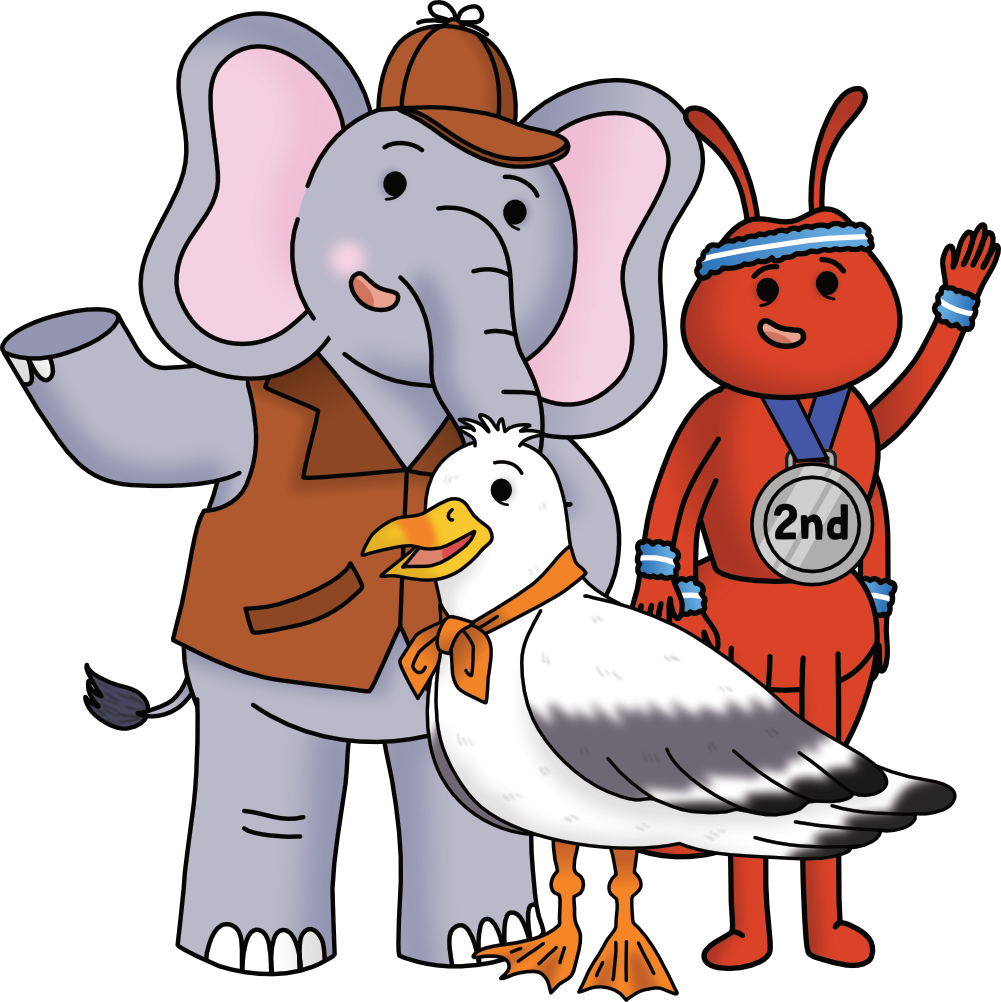
In Week 12 the children will be reunited with the ants and butterflies, Sid the Seagull and Inspector Nelly through our unique concept cartoons, which provide an opportunity for discussion to draw out mathematical thinking and language, before carrying out simple activities that allow you to observe and assess children's understanding of the summer blocks to 20 and beyond, how many now? And manipulate, compose and decompose.
68
Maths Consolidation and Assessment Pack 1

This Maths Foundations Early Years consolidation and assessment pack gives you everything you need to carry out a To 20 and Beyond Summer maths recap and assessment at the end of the Summer term of Reception.
64
Maths Consolidation and Assessment Pack 2

This Maths Foundations Early Years consolidation and assessment pack gives you everything you need to carry out a To 20 and Beyond Summer maths recap and assessment at the end of the Summer term of Reception.
62
Maths Consolidation and Assessment Pack 3

This Maths Foundations Early Years consolidation and assessment pack gives you everything you need to carry out a How Many Now? Summer maths recap and assessment at the end of the Summer term of Reception.
60
Maths Consolidation and Assessment Pack 4

This Maths Foundations Early Years consolidation and assessment pack gives you everything you need to carry out a Manipulate, Compose and Decompose Summer maths recap and assessment at the end of the Summer term of Reception.
59
Maths Consolidation and Assessment Pack 5

This Maths Foundations Early Years consolidation and assessment pack gives you everything you need to carry out a Manipulate, Compose and Decompose Summer maths recap and assessment at the end of the Summer term of Reception.
Week 13
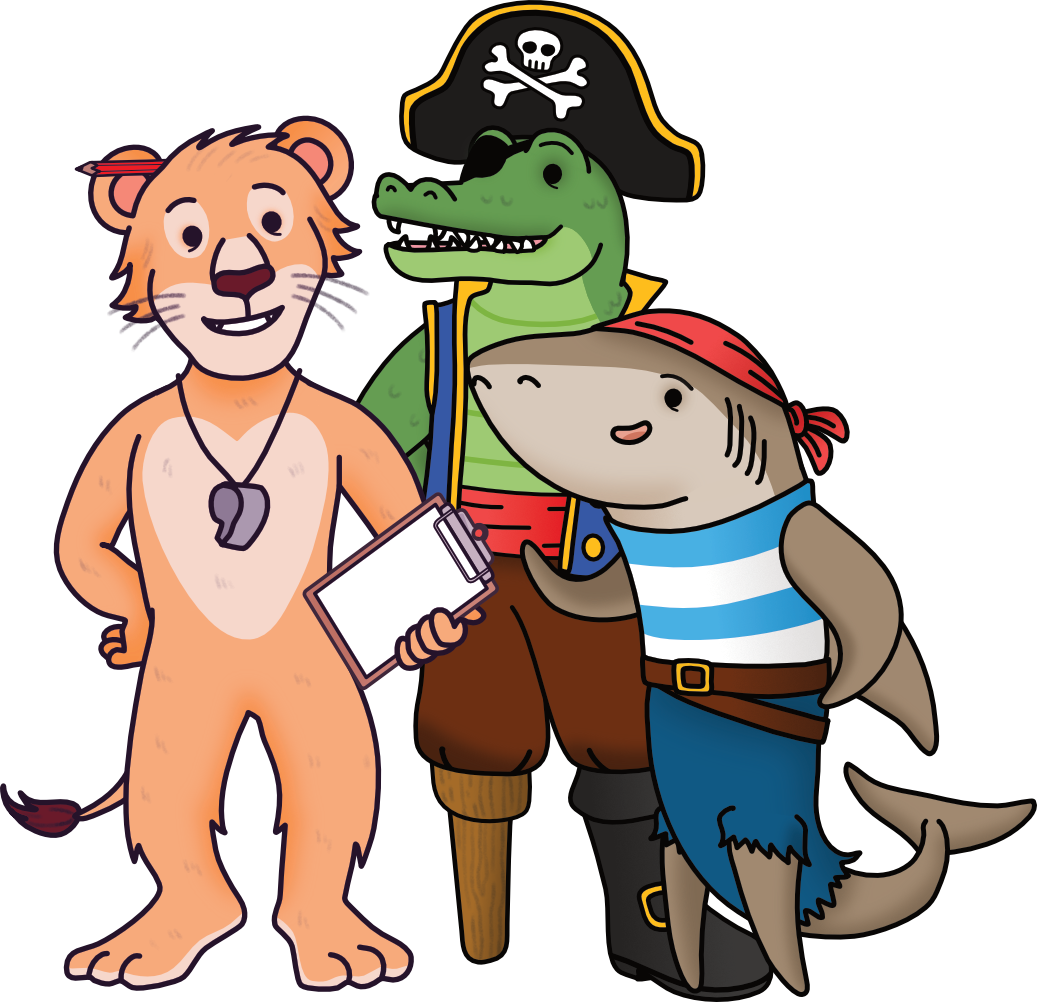
In week 13, the children will look at our unique concept cartoons again, this time featuring the lions, Apollo and Cleo and Captain Jolly and his motley crew. These concept cartoons provide further opportunities for discussion and mathematical thinking, this time focussing on the summer blocks sharing and grouping, and visualise, build and map. This will allow you to complete your observations and assessment for the summer term before the children move to year 1.
61
Maths Consolidation and Assessment Pack 6

This Maths Foundations Early Years consolidation and assessment pack gives you everything you need to carry out a Sharing and Grouping Summer maths recap and assessment at the end of the Summer term of Reception.
61
Maths Consolidation and Assessment Pack 7

This Maths Foundations Early Years consolidation and assessment pack gives you everything you need to carry out a Sharing and Grouping Summer maths recap and assessment at the end of the Summer term of Reception.
58
Maths Consolidation and Assessment Pack 8

This Maths Foundations Early Years consolidation and assessment pack gives you everything you need to carry out a Visualise, Build and Map Summer maths recap and assessment at the end of the Summer term of Reception.
61
Maths Consolidation and Assessment Pack 9

This Maths Foundations Early Years consolidation and assessment pack gives you everything you need to carry out a Visualise, Build and Map Summer maths recap and assessment at the end of the Summer term of Reception.
61
Maths Consolidation and Assessment Pack 10

This Maths Foundations Early Years consolidation and assessment pack gives you everything you need to carry out a Visualise, Build and Map Summer maths recap and assessment at the end of the Summer term of Reception.